Book in Progress:

Cloud City
Seattle – the Laggard That Became a Superstar – Navigates the Perilous Future of Cities
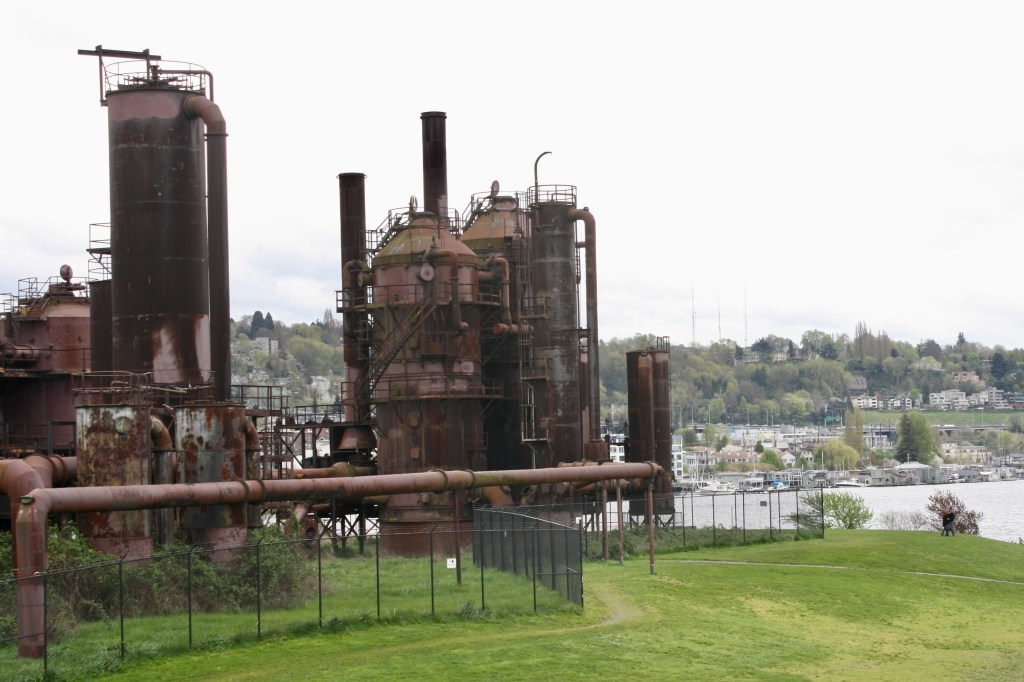
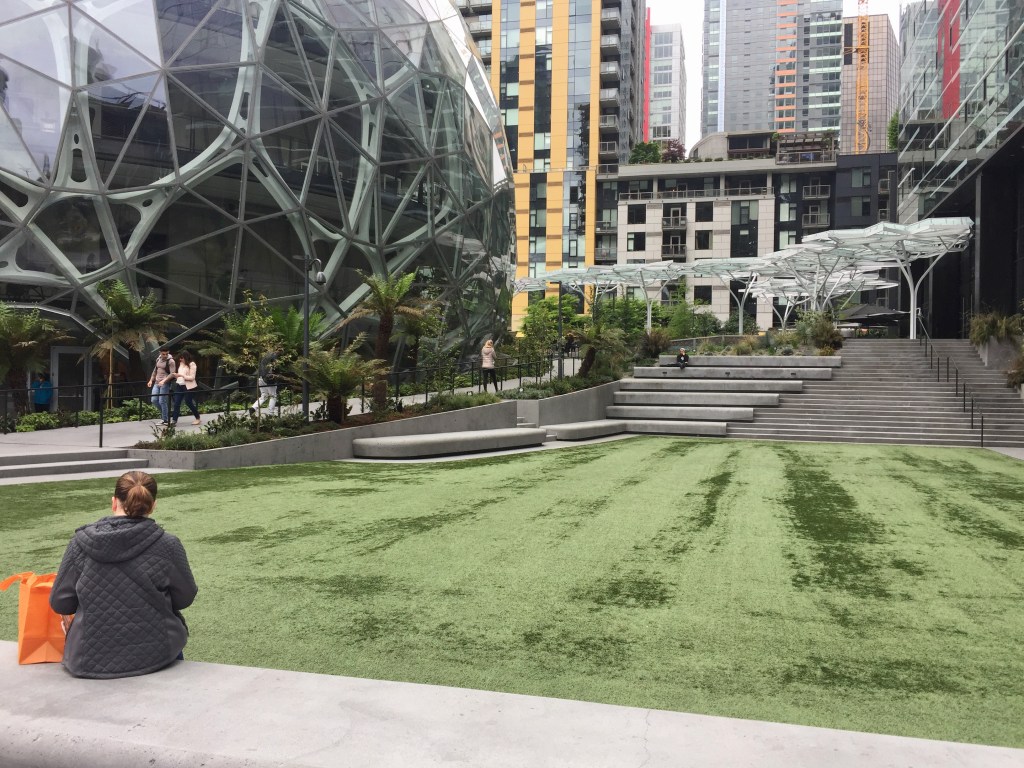
In Cloud City James S. Russell draws readers along in his search for the roots and endurance of a vital, values-driven local culture in Seattle that has fostered great businesses and admired urban livability. The culture of a city is not much credited with business success in an era of blinkered pragmatism that ignores qualities of place. Seattle has triumphed precisely because a a widely shared and enduring ethos values civility, cooperation, and collaboration that has helped the region adapt to change and nurture businesses with a transformative vision.
Seattle overcame geographical isolation and decades of setbacks to become among America’s most appealing cities as well as a cauldron of innovation. It has nurtured several of the world’s most influential companies, including Boeing, Nordstrom, Microsoft, Starbucks, Costco, and Amazon. It has become a center of global-health and anti-poverty innovation.
In stories of one city’s triumphs and missteps, Cloud City reveals how cities and businesses thrive together, but also how they come to loggerheads and fail each other. The book places Seattle’s unique stories in the context of cities that have chosen (or have been forced to endure) very different destinies, such as opportunistic sunbelt cities and older industrial centers that have struggled to thrive.
Those stories are extraordinarily timely since the 2020s have brought unprecedented new challenges for cities, most of which are thrown into high relief in Seattle. Today this “superstar” city finds its enormous success comes at an ever-greater price in housing costs, traffic jams, stagnating incomes, and a vanishing middle class. The tech and pandemic reshuffling of work even threatens to overturn the historic role of cities as places of intense human exchange, which historically has detonated creativity, enhanced wealth building, and spurred people to realize themselves. In an era of overwhelming corporate power, Seattle’s admired home-grown business giants have been besmirched by monopolistic behavior and safety lapses.
All cities will need to address big-picture issues like housing affordability, effective mobility, and climate change. They must collaboratively push states and Congress to act in concert–rather than at odds–with cities. Cities are still America’s most future-focused places, where entrepreneurs continue to invent not just new enterprises but entirely new economic sectors, as Seattle has done by championing global health and innovating to reduce greenhouse-gas emissions. Microsoft has overhauled a culture long devoted solely to market dominance, and now wields an ethical soft power that collaborates with peer companies and entire nations to address cyber warfare and other threats emerging as the power of computing grows exponentially.
What’s a city for? People are asking, as screens increasingly dominate our interactions with others and automation roils urban economies. Seattle and other cities adept at adapting are rewriting the script.
Other books:

The Agile City: Building Well Being and Wealth in an Era of Climate Change, Island Press, 2011. Understanding forces that act on cities, including real estate transportation, finance, and water supply and how they can be used to address climate change at the scale of individual buildings, communities and landscapes. You can buy this book here
Architecture to Landscape: Salvatore LaRosa and Ronald Bentley monograph, Twice Arts Foundation, 2005
Book contributions:
Editor and bylined writer, The Mayors’ Institute: Excellence in Design: for the Mayors’ Institute for City Design and the National Endowment for the Arts, and the American Architectural Foundation, Princeton Architectural Press, 2002
“Form Follows Fad: The Troubled Love Affair of Architectural Style and Management Ideal,” essay in On the Job: Design and the American Office, catalog for exhibit at the National Building Museum, Washington, D.C., 2000
“The Power of the Pragmatic,” introduction to monograph, Studios Architecture, L’Arca Edizioni, 2000
Introductions to Phaidon “Architecture Threes” anthologies, Phaidon Press, 1999
Twentieth Century Museums I (New National Gallery/Mies van der Rohe; Kimbell Art Museum/Louis I. Kahn; Museum for Kunsthandwerk/Richard Meier)
Twentieth Century Museums II (United States Holocaust Memorial Museum/Pei Cobb Freed; Clore Gallery/James Stirling, Michael Wilford; Museum of Modern Art, Gunma/Arata Isozaki)
Places of Worship (St. Paul’s Cathedral/Christopher Wren; Church of the Sacred Heart/ Joze Plecnik; Church on the Water, Church of the Light/Tadao Ando), 1999
Entries in Icons of 20th Century Architecture: Prestel, 1998
“Learning from Industry,” in Modernism at Mid-Century: The Architecture of the U. S. Air Force Academy, University of Chicago Press, 1994)
 James S. Russell