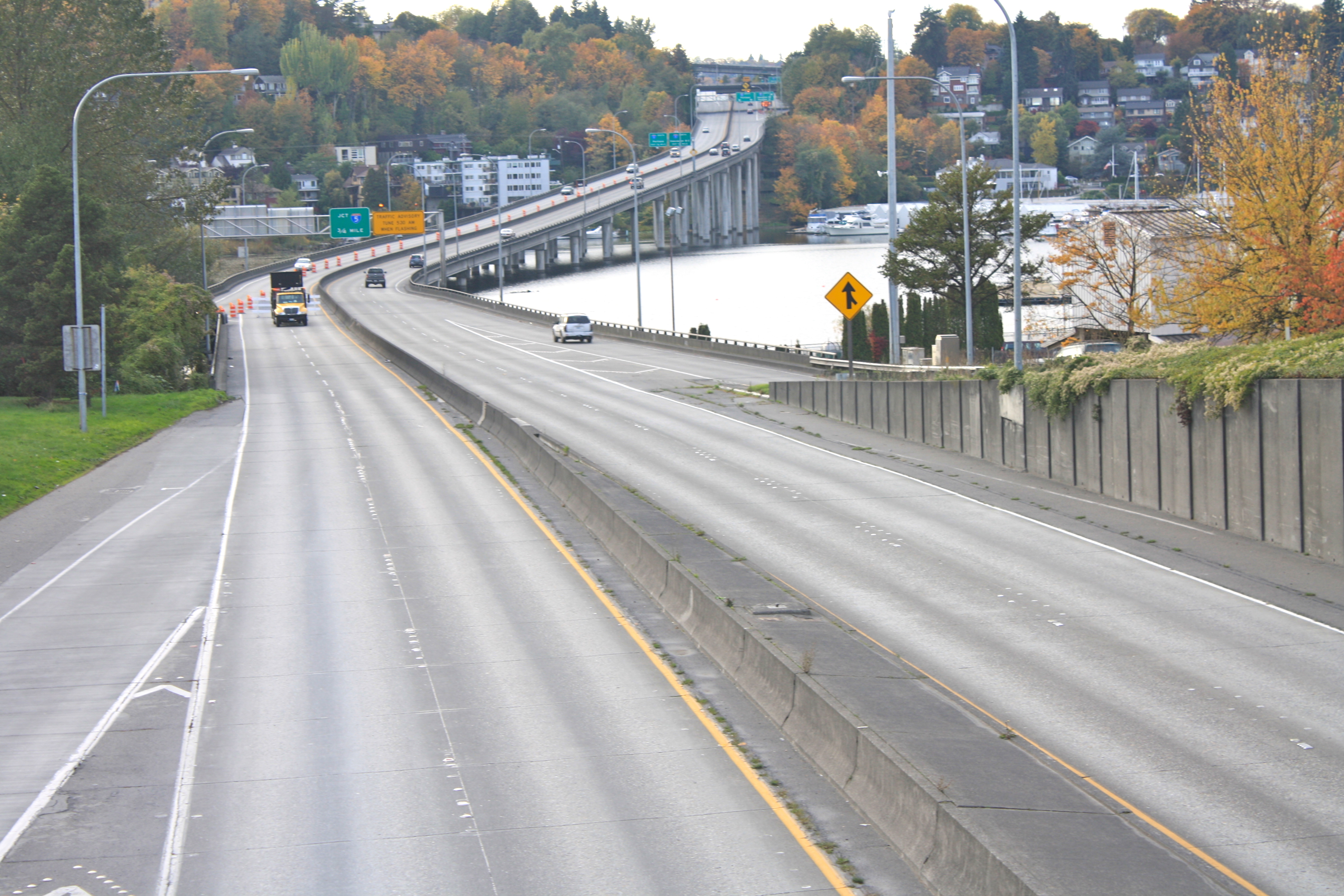
Vast, empty rural freeways to nowhere and suburban beltways clogged for miles. This is the mess the Highway Trust Fund has made. It is the best model for financing transportation. But it’s got to die.
When the nation was truly dedicated to building an interstate mobility network to be funded by user fees, the Trust Fund made sense. Now it has fallen victim to right-wing ideology, which deems any increase in the fees an anathema tax increase. They think their unbending stance will defeat the effects of inflation. Funny, that hasn’t worked.
When the tax argument fails, they trot out the poor people, and bewail their gas-tax burdens. Yes a higher gas tax impacts low-income people more, but these crocodile tears are not shed when local officials in poor cities find themselves forced to hack service and jack-up transit fares, which have risen far more rapidly than gas fees. The poor only matter to the anti-taxers when they are a useful photo-op prop.
The reality for low-income people is that you commute for an hour each way to a low-paying job from an inner suburb like Edison N. J., annual cost (fuel not predominant) conservatively $10,000. Or you pay more rent to live in a transit-rich city like New York and commute an hour and a half on trains and busses for an annual cost of about $1,300. It’s actually a lose-lose.
Green Streets Strategy
In attempting to scrape together some interim funding bandaid, Congressional schemes propose robbing obscure programs that lack the well-oiled lobbying apparatus of the highway builders. This is a pattern in the states, too, in which sales taxes and other general revenues are used to pay for roads for users, few of whom blink an eye when volatile pump prices rise 25 or 50 cents a gallon.
If there is to be a national means of funding transportation, it must be in service to a national mobility strategy, which does not exist and would be DOA in today’s congress. Of course that strategy would be multi-modal in scope, deploying air, roads, rails, transit, biking and walking layered to serve need. (Believe it or not, need is a new concept. The Interstate highway system was drawn across the country as an abstract cartesian grid. Neat, but hardly a grand plan.)
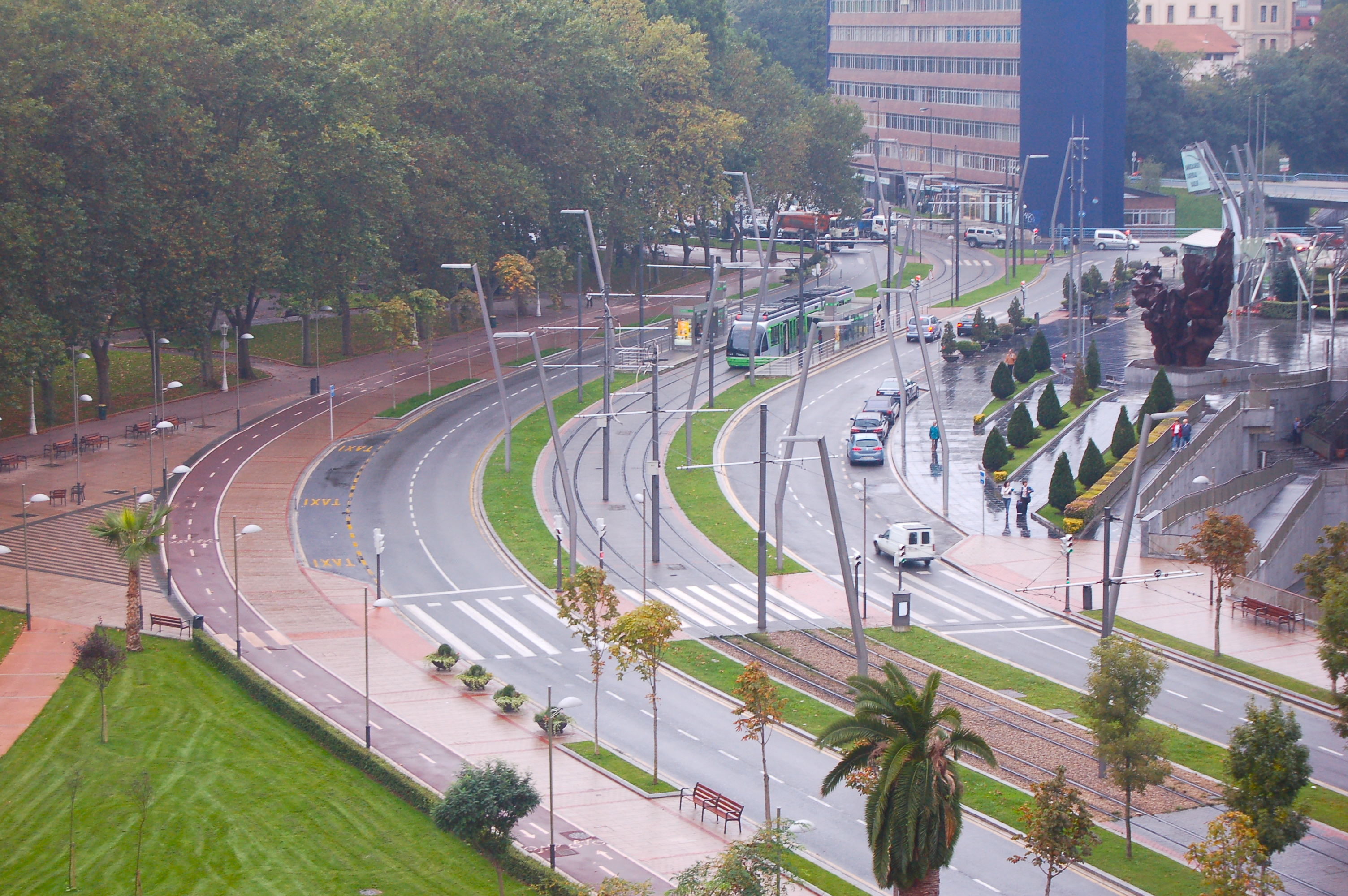
A sensible transportation strategy focused on the future would encourage a shift from trucks to freight rail, from short-haul air and long-haul auto driving to fast trains, and encourage greater bus and rail commuting, bus rapid transit in suburbs, and a great deal more walking and biking in cities, suburbs, and small towns. That would mean a mix of revenue sources: user fees and fares, tolls, congestion pricing, and so on.
Such a strategy would serve an economy increasingly needing to collaborate in highly interactive downtowns—whether suburban or urban—and it would reduce pollution, congestion, and greenhouse-gas emissions in the process. Instead we waste billions fixing bottlenecks here and there, which only rearranges the traffic jams.
Mandating Efficiency, Subsidizing Guzzling
A national Trust Fund that distributed money according to need was defeated some years ago when Congress required 90 percent of road fees to be returned to the originating states. That just makes the Feds a pass-through; might as well get rid of it.
The refusal to increase road fees is especially pernicious now, because we need to reduce fuel use to undercut oil dictators and slow greenhouse-gas emissions. Over years, non-users have been paying more and more of the highway bills as Congress has added highway dollars to the national debt instead of assessing users for them. Regulations are pushing us toward vehicles that get higher mileage, while we deeply subsidize people who drive gas guzzlers long distances.
The Trust Fund that built the Interstate Highway system was conceived to make all capital costs paid by users, while maintenance was paid out of general revenues. It has fallen steadily behind senseless road-building demand. That does not stop the builders. If you drive someplace like Dallas, where six-layer stack intersections are going up everywhere, you see a massive highway expansion program being built on toll lanes and debt (untransparently contracted for) that may leave all state taxpayers (not just road users) on the hook for billions if the economic model turns out to be wrong. This is the “privatization” advocated by conservatives that has yet to show itself cost efficient. Because Texas can’t borrow without a revenue stream, toll lanes are a big percentage of the capacity expansion, which sets up a two-tiered transportation system: smooth and easy for those willing to tack $10 or $20 onto their daily commute, a bloody mess for those who can’t pay.
That’s going on everywhere. New York Gov. Cuomo touts a $4-billion Tappan Zee Bridge replacement (does anyone believe this cost figure?), but the tolls could go as high as $14 from $5 now. Seattle is building a massive road tunnel along its waterfront and replacing a floating bridge to Microsoft to the tune of about $5 billion each. Final tolls have not been set but they are likely to be $5 and up for each structure. It has boosted the sales tax to fund under-engineered and (so far) underutilized light rail.
Why does the Trust Fund suddenly start to look good by comparison? Maybe because it is a straightforward, fair, and generally inexpensive way to raise money?
Weep for Wimps
What would happen if Congress lets the Trust Fund die? The states would have to replace the Federal 18-cent tax with a local one. No one need notice the difference. Governors will be mad, because they’ll be tarred with the same tax-raiser rhetorical mud thrown around in Congress, but in fact the heavy Federal hand in mobility has pretty much stifled state-level mobility innovation. I weep for these wimps.
Some (the wealthier, less ideological states) might even take the opportunity to raise the fee, seeing a competitive advantage in transportation that actually works. Some might use the opportunity to look strategically at what transportation they fund and how they fund it. (I like the heretical idea of using some gas fees to finance transit when it can get people off crowded roads. There’s no better way to reduce congestion.) Some states, like the northeastern, most transit-rich ones, could even band together to fund high-speed rail and integrated freight and commuter-rail projects that could confer a major competitive advantage since even the most sympathetic Congress would never give the Northeast dollars commensurate with ridership and need.
Highway Trust Fund—signed into law with enormous reluctance by Republican President Dwight Eisenhower—you are done. RIP.


 James S. Russell
Leave a reply to dock box fiberglass Cancel reply