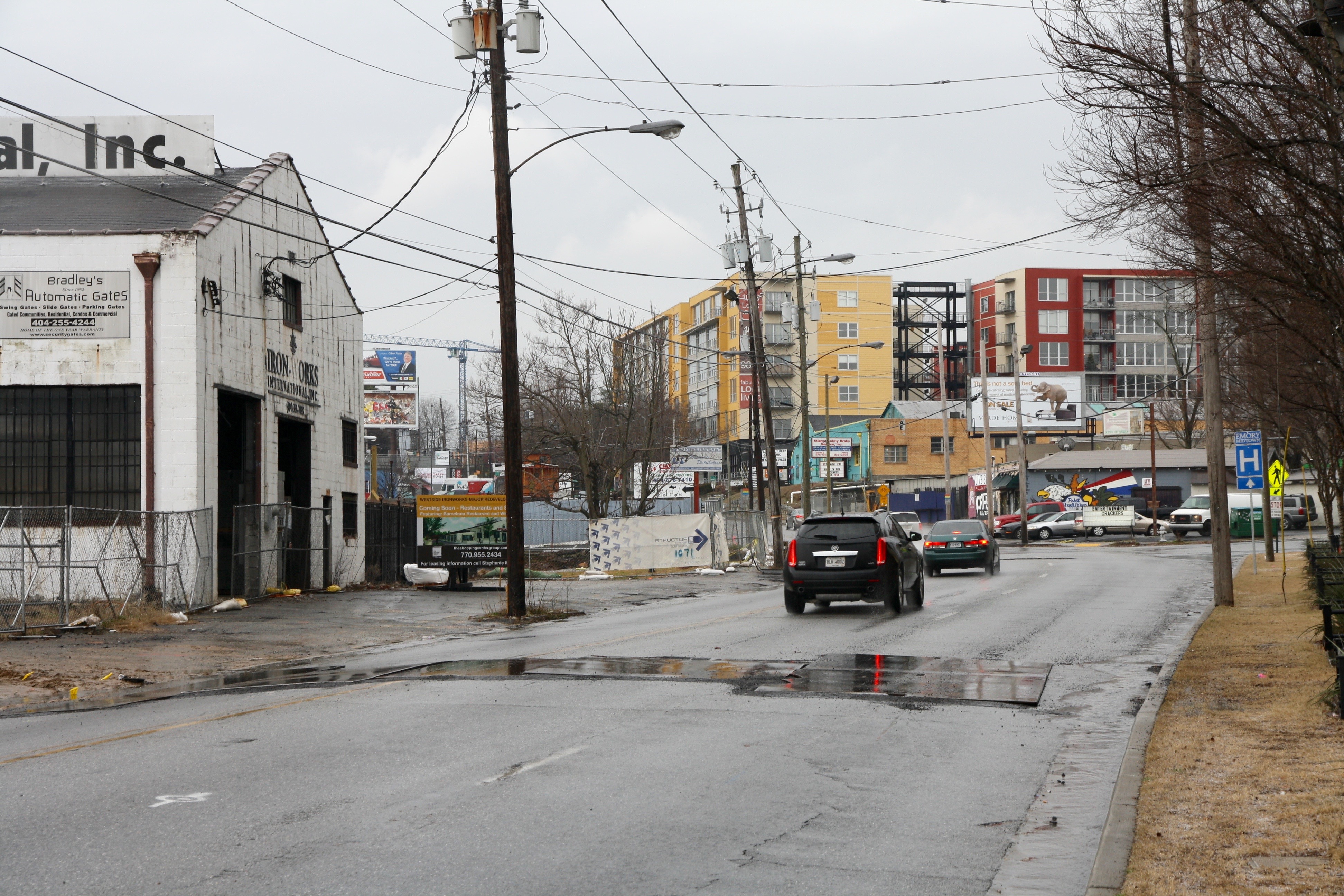
Along Atlanta’s potholed Howell Mill road, sagging sheds of metal salvagers, brake liners, and security-gate fabricators are rapidly giving way to Texas donuts: faux-loft apartment buildings wrapping parking structures. Amid the light-industrial detritus can be found a contemporary-art incubator and the White Provisions development, a huge residential/commercial loft complex that anchors a wildly popular restaurant and retail scene. It’s a real-estate wild west, as Atlanta tries on the idea of becoming a city.
I visited Atlanta late last winter for a book I’m writing, Stories Cities Tell about the Future. I have chosen a few cities to write about that seem to have arrived at something of a crossroads. That, I learned, is certainly the case with Atlanta.
The city grew extraordinarily rapidly for decades on freeways and subdivisions tucked under the lush canopy of trees, but in recent years growth has slowed. The recession hit hard.
Inept attractions
In May, the city hosts the American institute of Architects’ National Convention. Participants may wonder where the “city” of Atlanta is—as people long have. There’s no great urban gathering place (the fussy, tired Olympic Centennial Park hosts no local life but simply foregrounds such architecturally inept attractions intended to distract conventioneers as the World of Coca Cola and the Georgia Aquarium. I had hoped to see the Center for Civil and Human Rights, a promising museum that recently opened, designed by Raleigh architect Phil Freelon, but it was closed the day I visited by panic over a snowstorm that failed to develop.
“Ah, yes, whither Atlanta,” Otis White, a consultant whose Civic Strategies works with cities and civic organizations, told me. “A place that rarely thought about the future is suddenly in doubt, like a teen-ager about to graduate from high school.”
Food Hall Frenzy
As young adults, many of the ubiquitous Millennials reject standard suburbia, with its mortgage obligations and long commutes, instead embracing Atlanta’s few charming neighborhoods of bungalows and cottages. The ones east of the downtown core burst with new energy as people seek places that feel real, where people meet, socialize and have fun.
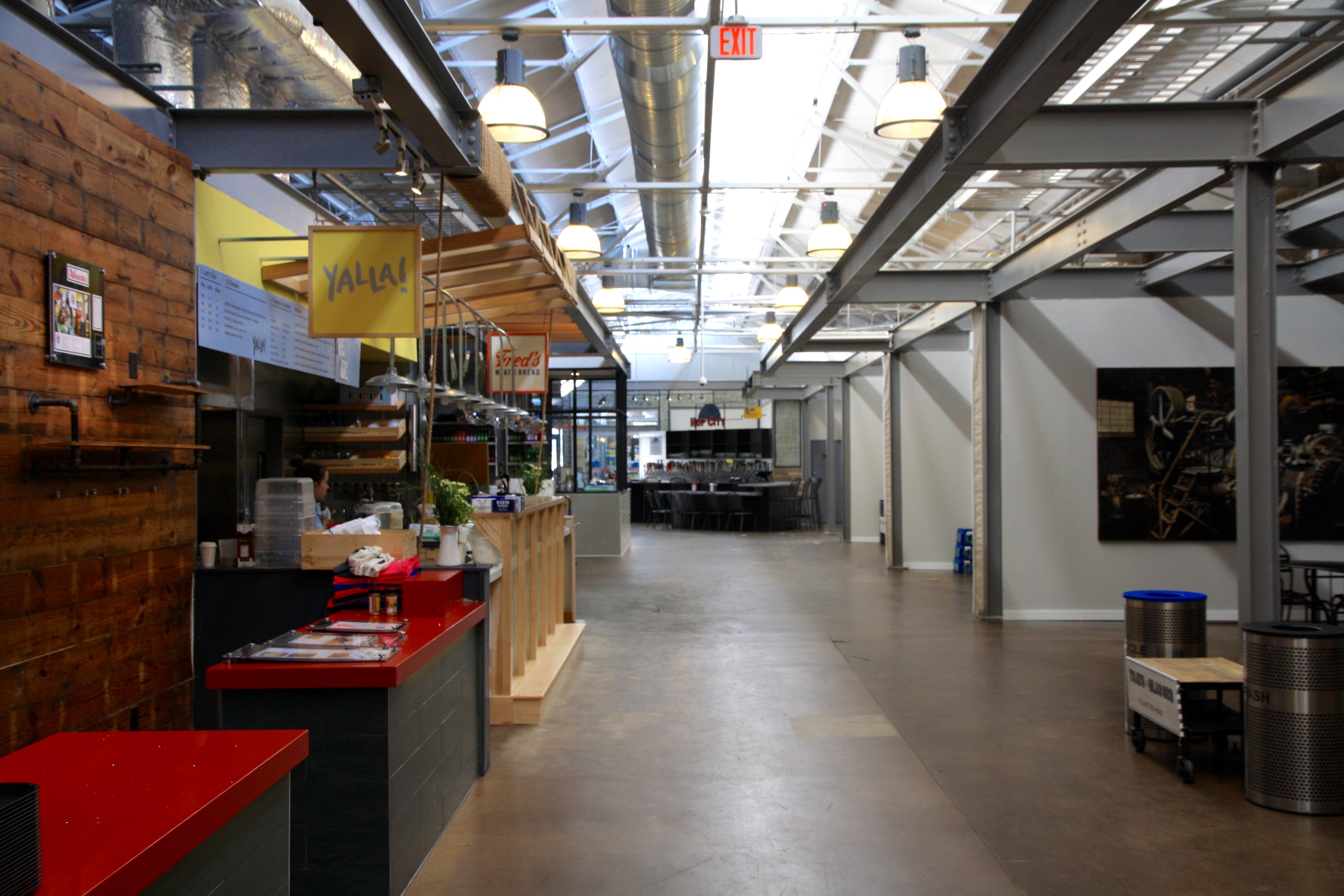
The Krog Street Market, in the Inman Park neighborhood, had only opened a few weeks before I arrived, yet it swarmed with people (I snapped this photo in a rare mid-morning lull.). It’s a food hall bursting with high-style eateries that dote on meat from hand-raised livestock, artisanal fast food, and craft brews. The surrounding land, until recently industrial, now sees rapid development of wood-framed faux lofts just like the ones along Howell Mill Road. Real-estate developers have gone whole hog for urban lifestyles, but this stamped-out product is extraordinarily flimsy and dumbed-down, free of architectural insight or amenity. They make lousy neighbors.
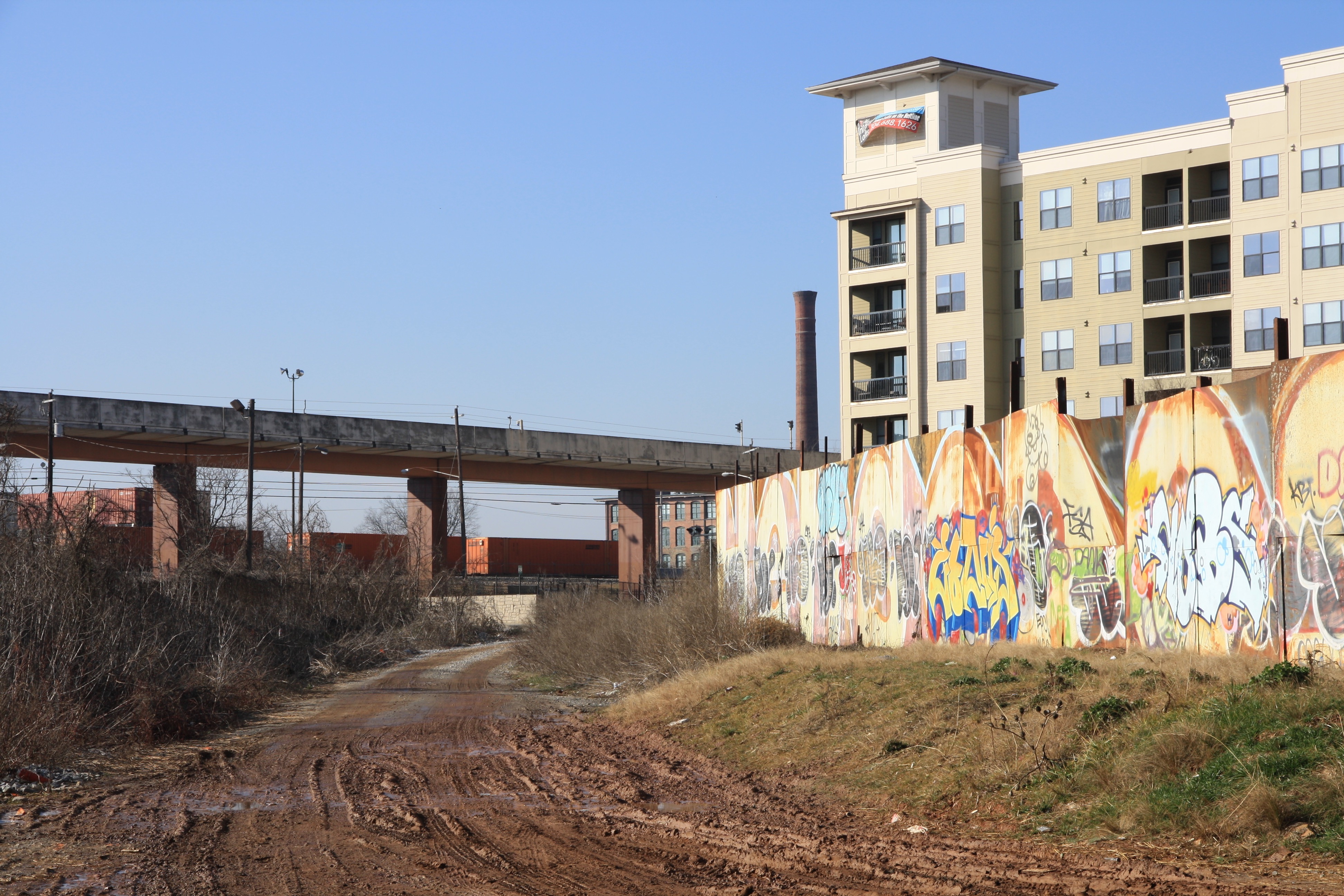
Much of the new wave of urban-apartment building has gone on in neighborhoods that already have traditional urban infrastructure, like sidewalks, which are remarkably rare in metro Atlanta. There are sidewalk fragments along Howell Mill Road, but you wouldn’t call it walkable. The area itself is isolated from the rest of the city, as so many neighborhoods are, by highway and other infrastructure corridors.
Suburbs Irrelevant?
The hunger for urbanity mystifies a massive local development community that has lived off the ever-expanding suburbs, the ever-widening freeways, and the proliferating office parks. But these places are no longer expanding, widening, and proliferating as the enclave lifestyle comes to seem too suffocating, the traffic too frustrating, and the office parks ill-suited to contemporary work cultures.
In what struck me as a gambit to assert a contemporary suburban relevance, the Atlanta Braves were lured with government incentives to Cumberland, in Cobb County, along the northern beltway wealth belt. The Braves are building at the nexus of an office park and megamall at the intersection of two freeways. In renderings, the stadium looks identical to the one it will replace. The existing Art Deco-esque stadium, built in an isolated parking-lot desert south of Atlanta’s downtown for the 1996 Olympics, is obsolete only in the minds of the team owners, but Cumberland dreams of a big economic spinoff unlikely to develop if the past is any guide. (The existing stadium has attracted zero related development.)
Catalytic BeltLine
A gigantic 1920s brick loft building that once was a rather dignified store and warehouse for Sears is being transformed by the developer Jamestown into—inevitably—loft apartments above what’s called Ponce City Market, another food hall. Both Krog Street and Ponce City abut the most fully realized segment of the BeltLine, a 22-mile park, trail, and planned rail-transit corridor that necklaces central Atlanta. It may someday unite 46 neighborhoods and in that way could be truly transformative. The 2.5-mile East Side segment swarms with cyclists, dog-walkers, and perambulating parents, demonstrating a hunger for places where you can promenade in the city. Panoramic views open unexpectedly; restaurants and bars are springing up like crazy.
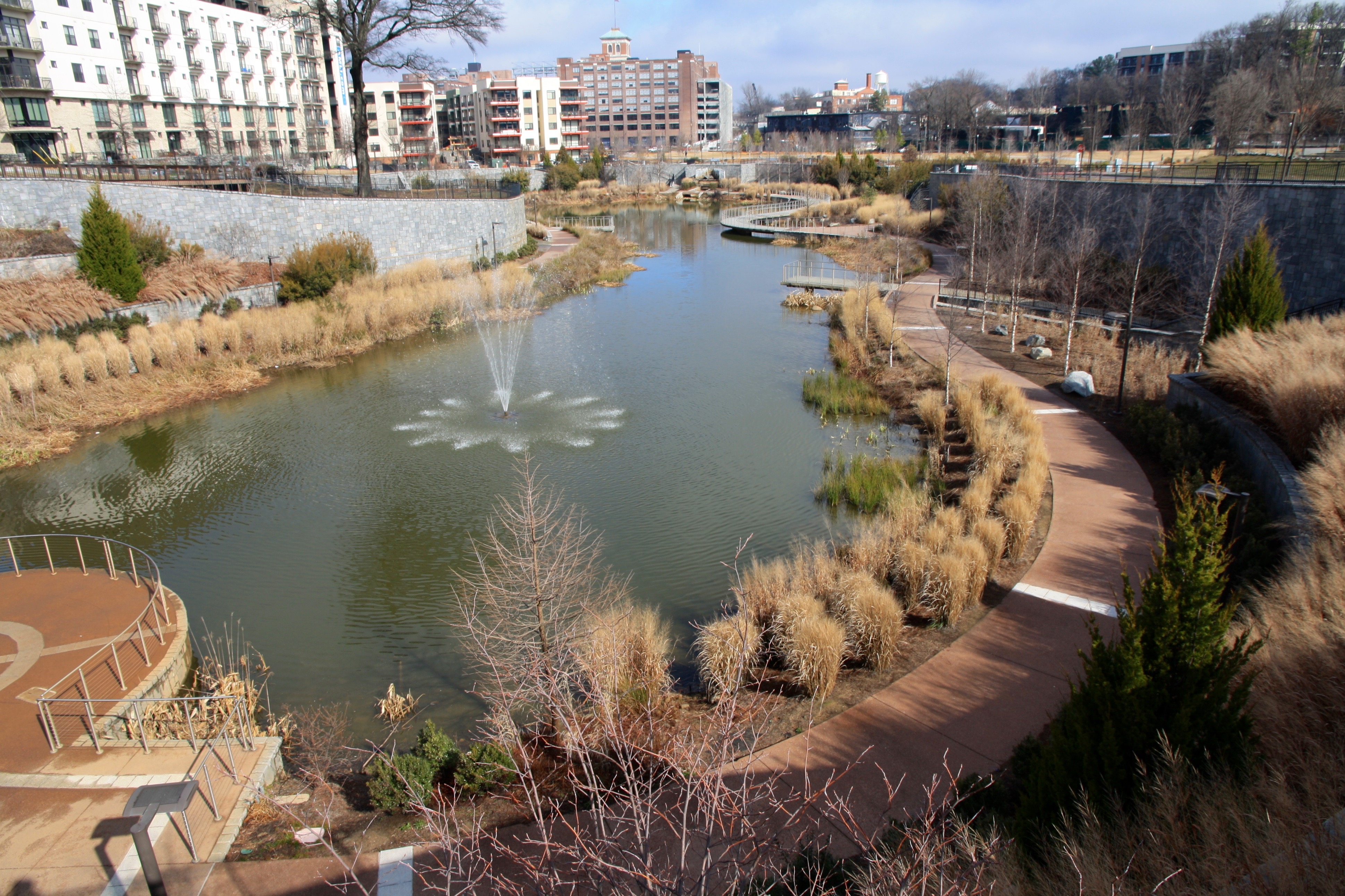
The BeltLine has come to fruition slowly and so far feels a bit clumsily over-engineered yet under-designed (masterplan by Perkins + Will with James Corner Field Operations), which reflects the widespread disrespect for the possibilities of architecture in Atlanta. Other segments are open, but amenities of those in poorer communities tend to be skimpy so far. The timidity in approach also reflects the Southern reluctance to spend money on anything public—even though the real-estate frenzy generated by the Belt Line has already demonstrated how powerfully catalytic it can be.
Private City
The divide between public disinvestment and privatized luxe was brought home to me on a visit to a brand new development called Buckhead Atlanta. It is primarily a luxury retail enclave built with the look and construction quality of a ye-olde Main Street movie set, amid which glassy condos rise like overbearing weeds. (A truly strange dark-grey mausoleum turns out to be a multi-story Restoration Hardware flagship. Are they selling Craftsman-style coffins now?)
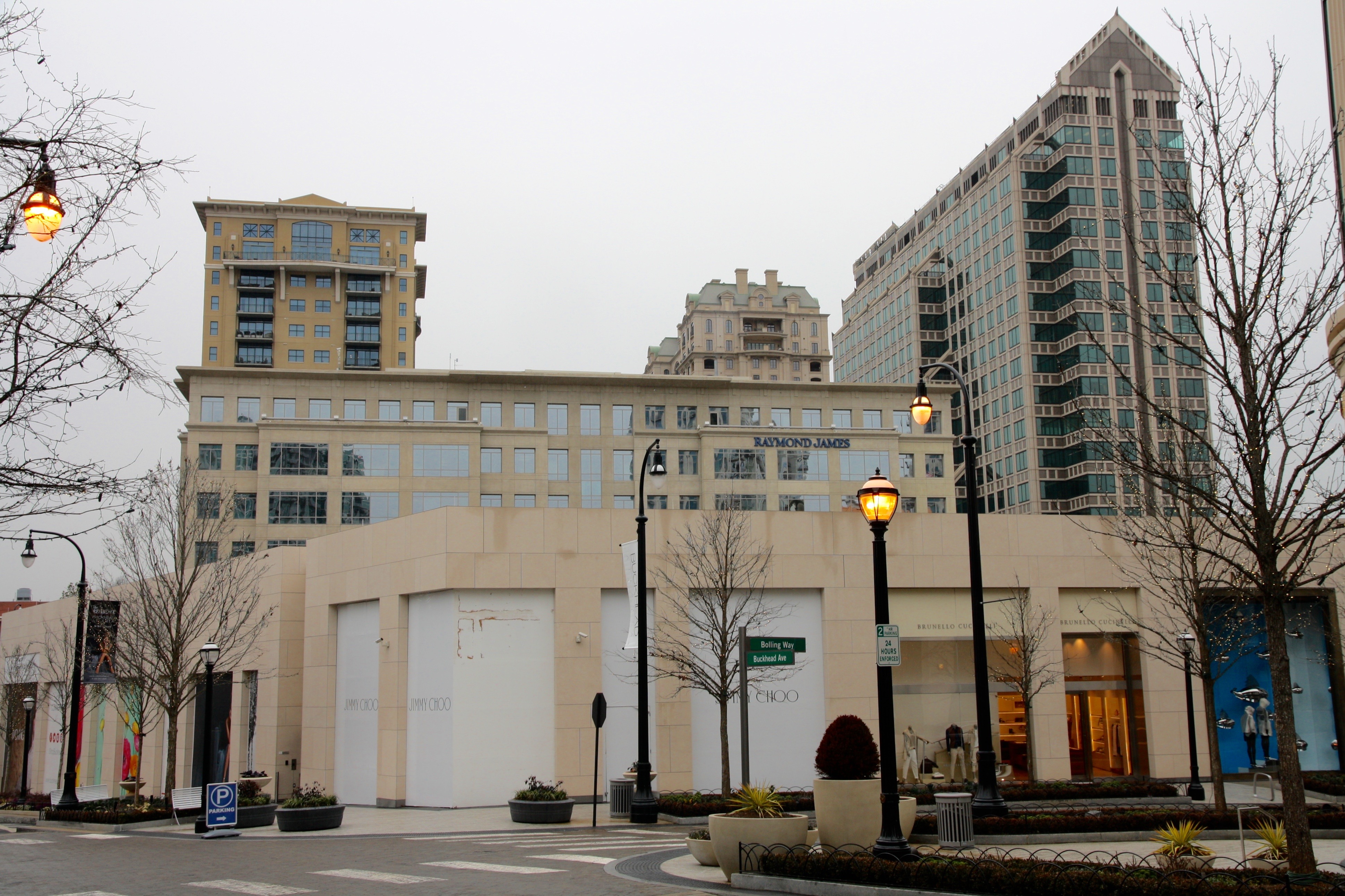
Why someone would shop for an exquisitely detailed dress in a building where the fake-stone panels don’t even align is beyond me. Like many real-estate names, this one is redundant, but the project had formerly been known as the Streets of Buckhead. In trying to parse the name change, I wondered if the idea of streets was simply too exotic or (more likely) deemed too downscale.
Buckhead Atlanta wraps and tries to ignore the Buckhead public library, a tiny but pugnacious low-budget steel grey box that nevertheless extends an idiosyncratic welcome with an elaborately composed steel canopy. It’s a refreshingly inventive 1989 design by Atlanta’s world-class architects, Merrill Elam and Mac Scogin. Because it is a public building, though, it has been allowed to deteriorate alarmingly.

This just scratches the surface of Atlanta’s complicated present and future. My travel to Atlanta and other cities was made possible in part by a grant from the Graham Foundation, for which I am grateful. I’ll be writing more and look forward to returning to a city of fascinating and articulate voices.


 James S. Russell
Leave a reply to James Golden Cancel reply