
The Frick Collection’s formality is as astringent as a dry martini. We marvel at the works of great art hung within rooms of impersonal splendor. Yet the Frick is rather contrived, an elegant knockoff of a French country seat, by Thomas Hastings, of Carrère and Hastings, carefully re-proportioned to fit on a New York City block. Its horizontality and stiff front garden set it defiantly in contrast to the much larger buildings that surround it.
Does it lose its relevance if it can’t evolve and grow? This question arises now that the Frick has surrendered in its long, contentious battle to build an addition in a rear garden. Critics regarded the garden as a cultural landmark. The Frick deemed it a placeholder for long-planned growth.
Puny battles?
The museum’s dilemmas are only one of several that have come out of recent historic-preservation battles in this the 50-year anniversary of landmark protection in New York City. These fights have been joined more feverishly than ever as great wealth exerts itself, often hubristically, to transform the city. New York magazine’s critic, Justin Davidson, called these “puny battles,” and I don’t disagree. But I want to extend his argument farther in hopes of identifying what’s at stake more clearly.
I love the Frick as do so many others. And so my first instinct was not to second guess its professed need to expand. Nevertheless, I am happy that the project won’t proceed.
The expansion architect, Davis Brody Bond, tried to disguise the bulk of the addition by stretching the 70th Street elevation deeper into the block, then extending the library across the back of the Frick—duplicating the exterior treatment of both. The Frick, however, is a masterpiece of form, proportion, material and decoration, and it was wrong of DBB to treat it as wallpaper.
The focus of much preservation ire was the 1973 garden by Russell Page installed behind the museum on land it had acquired. It’s a welcome patch of green in the concrete metropolis, but I could not convince myself that it was essential to the Frick’s architectural integrity.
But even as I write this I recoil from how small, even arcane, my argument sounds. Almost no one beyond a small coterie would likely notice the bowdlerization of the Frick once it was completed. And yet it is precisely the domestic scale and the quest for perfection both in the architecture and in the collection that defines the institution. The Frick is valued precisely because it provides such an intense, intimate experience, uncompromised. To its credit, and under a lot of pressure, it recognized its mistake.
Palace for the people—or writers?
In a review upcoming in Architectural Record, I consider Scott Sherman’s about-to-be-published book, Patience and Fortitude: Power, Real Estate and the Fight to Save A Public Library (Melville House). He chronicles the uphill battle preservationists and scholars waged against a plan to turn research stacks within the marble temple of the New York Public Library into a 21st-century circulating collection, paid for by the sale of two existing circulating libraries. The story of the library’s rickety and risky plan is harrowing, but bigger questions got lost: How should the library’s research function evolve with time and technology? How best to make original and irreplaceable material available? Should the library aspire to support highest-level research when it has long struggled to raise the money to do so?
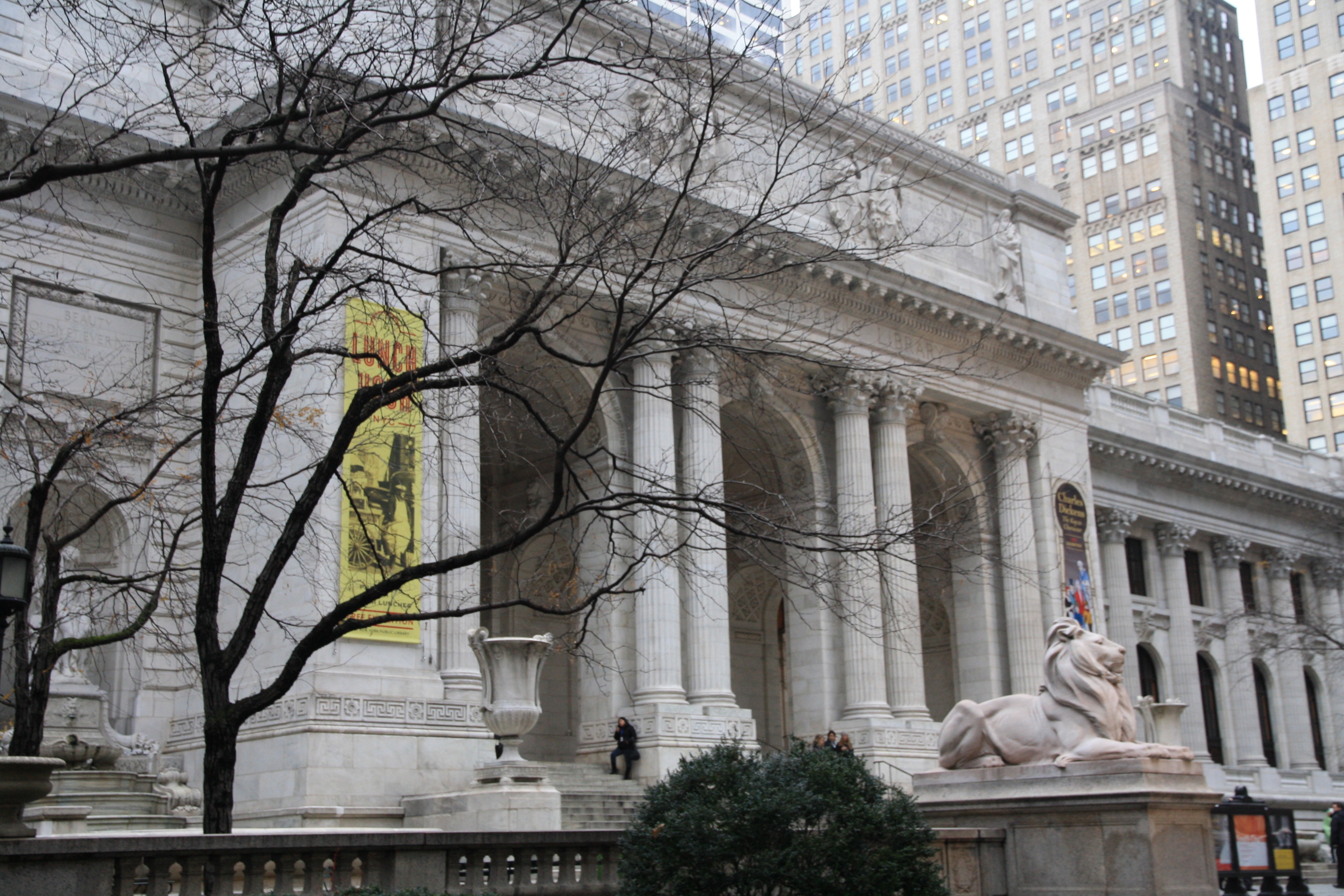
Its no spoiler to reveal that the preservationists won, but the denouement is a mixed one. The stacks at the center of the controversy have been emptied (though replacement space is said to be in construction.) The spectacular Rose reading room atop the stacks, which has been a glorious refuge for writers (quite a number famous) and independent researchers for a century, has been closed since October because of a structural problem. A redesign of the existing circulating library is on tap, and the library claims it can afford to fund it, but I can’t get the math to add up.
Embalmed Four Seasons
A furor erupted over plans by developer Aby Rosen to update the Four Seasons Restaurant, on which Mies van der Rohe and Philip Johnson collaborated. (It’s built within Mies’s masterpiece, the Seagram Building.) Restaurants are particularly difficult to “save,” because they tend to be ephemeral. The Four Seasons has had an incredible run, but the place feels embalmed these days—and Rosen is said to be shopping for a successor.
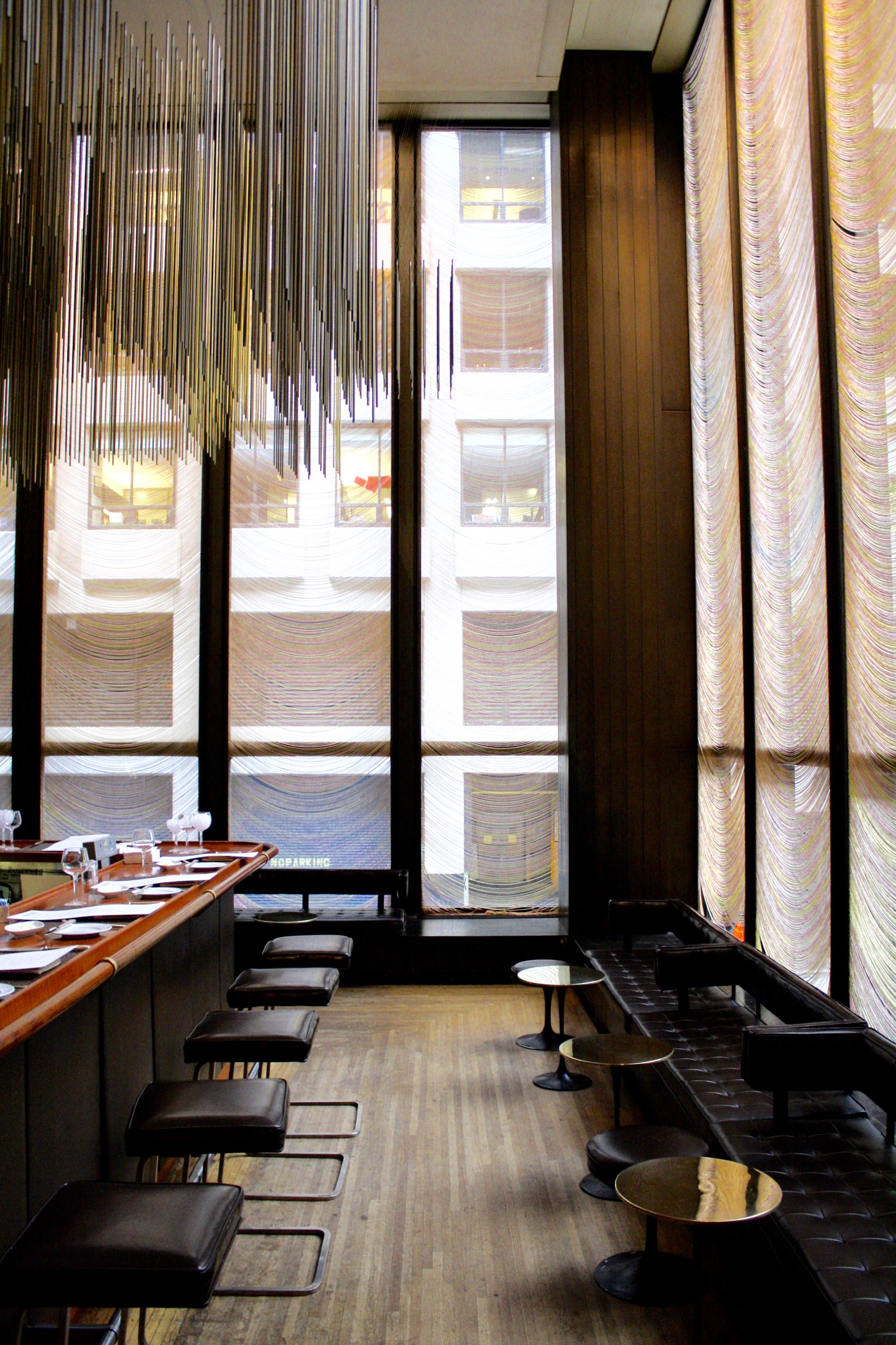
For me, the shape and simple grandeur of the space must be preserved and adapted should a new eatery move in: The expanses of glass, the elegant floating metal-paneled ceiling plane, the Richard Lippold sculptures . . . . I’m not sure much else needs to remain. Johnson was not a talented or sensitive interior designer, though I like the elegant beaded curtains. The white Carrera-marble pool is iconic, but I’ve always found it jarring.
Many would disagree, but I think a talented and sensitive interior designer could change a great deal in updating the restaurant’s sparkle and glamour, while keeping it recognizably itself.
I’m not sure we have a choice but to trust Rosen. Would the Landmarks Preservation Commission do better? A coalition of Mies enthusiasts? It’s a restaurant. If he does a bad job, it can be undone.
Distorting landmark law intentions
Unfortunately the challenges to the city’s fabric today don’t lend themselves to the single-issue obsessives who saved the library, the Frick, and the Four Seasons. The Times recently surveyed threatened buildings in Midtown Manhattan, which made the Landmarks board appear to be callous to the preservation of many buildings of clear historic merit. Mainly small scale, the doomed also lend civility to a part of the city being overwhelmed by overscaled, lowest-common-denominator monstrosities, many perpetrated by the hotel developer Sam Chang. Midtown, being largely commercial, has few defenders, and so its rich stock of extraordinary buildings gets demolished to make way for defacement even by big-name supposedly luxury developers like Related.
Though the pace of landmark designation seems brisk, the clamor for more preservation is getting louder. Neighborhoods want to wield landmark designation as a weapon against inappropriate development, which distorts the landmark law’s intent. Landmark designation, especially for entire neighborhoods, powerfully reduces affordability by heavily restricting development options, which encourages neighborhoods (especially with lots of lawsuit-ready lawyers and press-attracting celebrities) to push for preservation to stop development and shore up property values.
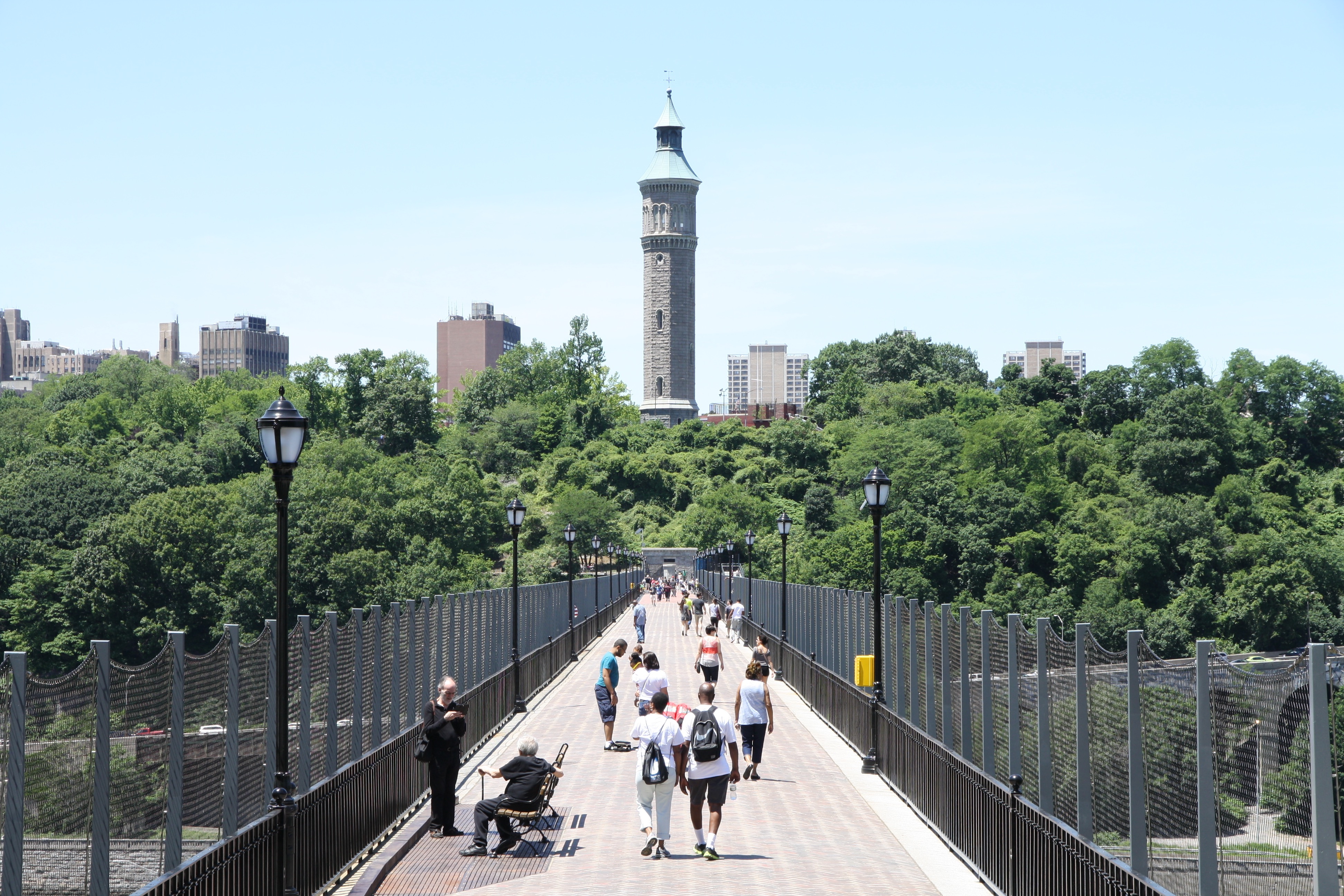
Preservation can be great for disadvantaged neighborhoods, creating a congenial investment environment that can lift all boats. Let’s celebrate the recent reopening of the 1848 High Bridge, which steps across the Harlem River in grand masonry arches, linking two solid neighborhoods in Upper Manhattan and the South Bronx. For walkers and cyclists its in the same class as the Brooklyn Bridge and the High Line.
Because housing and tax policy over-rewards speculation, however, redevelopment too often arrives as a tidal wave, leading to large-scale displacement of the people who heroically held disinvested neighborhoods together for decades. Activists and city officials are too often unwilling to engage this unsavory side of preservation. (“Saving Places,” an exhibition at the Museum of the City of New York, celebrates too much the cultural-elite roots of preservation while barely touching on contemporary preservation dilemmas.)
Preservation is one tool among several we can use to allow growth while retaining civility and diversity. If we demand responsive and innovative ways of approaching scale, context, and quality in new construction, we’ll see less junk developed to last only through its financing cycle.
Zoning could return to its roots—assuring access by every property of adequate light and air. We need to use more natural ventilation and daylighting, since both reduce consumption of fossil fuels, while creating amenity that does not come at the expense of casting neighboring properties into twilight. Transfers of development rights, abused by the builders of super-tall towers among others, deserve to be scaled back or eliminated—even though they have proved a useful tool to put cash into needy historic buildings.
Yes, some“puny” battles deserve to be fought, but preservation must become proactive and fought in a context that’s meaningful to the whole city and enlivens it.


 James S. Russell
Leave a reply to Debra Pickrel Cancel reply