Few of us will mourn the passing of a year of terror, so much of it inflicted under the banner of alleged religious orthodoxy. Senseless and shameless fanaticism dominates politics in the U.S.
The one voice that drew together the hopes of global millions was Pope Francis. He roiled the war mongers with a message of peace. As millions of refugees slogged across continents, forced out of their home countries by power-grabbing autocrats, he chastised the perpetrators, along with the anti-immigrant merchants of fear and the heedless billionaires by declaring that the poorest and most vulnerable among us deserved our greatest attention.
He has attempted to fling open the doors of the Catholic church to those it has ignored, vilified, and excommunicated: women, the divorced, gays and lesbians. He’s tried to cool the Church’s obsession with sexuality and abortion, its self-destructive embrace of celibacy and male-only priesthood.
The perpetrators of evil unleashed in the world today may now feel they can flick away a charismatic figure whose power lies only in moral persuasion—indeed a Pope whose humility and open-mindedness are consistently undermined by the reflexively defensive, radical conservatives methodically put in place by his predecessors.
Thorn in Vatican’s Side
Author John A. McCoy says Francis’s quest for a more compassionate Catholicism inspired him to dig up a biography he had set aside years earlier. It was of a a 94-year-old man who lives quietly in the languishing copper-mining town of Anaconda, which hunkers behind a mile-long pile of smelter tailings amid glorious Rocky Mountain peaks in Montana.
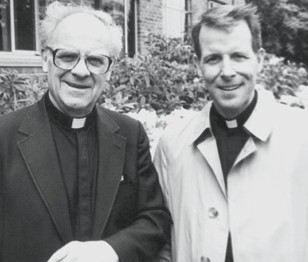
That man is Raymond G. Hunthausen, who was the Catholic Archbishop of Seattle from 1975 to 1991, and whose story McCoy tells in his book, A Still and Quiet Conscience.
Religion has rarely been a subject of my writing, as those familiar with my reporting and criticism know. Yet I find myself inspired by Francis, and have a personal connection to Hunthausen. My mother, now 94, grew up in Anaconda with Hunthausen and has spoken often of him, though his ordinary early life hardly suggested the leader and thorn in the side of the Vatican he would become.
Like Francis, he is that rare person who leads not with certainty but with compassionate wisdom painstakingly acquired. McCoy describes Hunthausen as a man inspired by Vatican II, the groundbreaking 1960s project that opened the church to the modern world (allowing the Mass to be said in local languages, for example) and focused the Church on peace, justice, human dignity, and human life. Vatican II anticipated a devolved, democratic church less reliant on Papal authority but answerable to its congregations.
As Archbishop, he prominently resisted the arms buildup of the 1980s, including the establishment of a base for nuclear submarines west of Seattle. (He proposed withholding income taxes as a form of civil disobedience, a cause briefly prominent, but lost. My niece’s husband crews on one of those nuclear submarines, silently crossing oceans as I write this.) He sought a less punitive attitude toward Catholics who had divorced and remarried, and looked for a wider role for women in the church, feeling (in the 1970s!) that ordination for women would become inevitable as would marriage for priests—cruelly antiquated policies that prove more damaging to the Church every year.
Though the Church deemed homosexuality intrinsically evil (as it still does), Hunthausen sought dialogue with gays and lesbians, permitting Mass to be said for us in Seattle churches (including the one my parents got married in). He protested discriminatory laws because he learned from engaging with people that sexual nature is intrinsic, and should not disqualify people from worship.
The Humiliation
In the 1980s, conservatives rose, determined to roll back the Vatican II reforms and centralize power in Rome. At the same time, Hunthausen was taking controversial public positions, reluctantly though firmly, with a genuine humility rather than a rigid certainty, and only after careful consultation and soul searching—very much like the Pope we see today. Hunthausen never directly contradicted Church teaching (that homosexuals could be good people though homosexual acts were bad, for example). Yet conservatives in America and in Rome increasingly saw him and many like-minded church leaders as a threat to Church authority.
Conservative critics accused Hunthausen of defying Rome, a campaign based on falsehoods, according to McCoy. The Archbishop was not only disciplined for failing to toe the Vatican’s autocratic line, he was publicly humiliated: ostentatiously assigned Vatican minders to make sure he didn’t color outside the lines.
The Archbishop’s struggle drew little attention outside the Pacific Northwest because it was seen as a battle over internal Church politics, rather than the show trial it was, with the explicit intention of asserting a retrograde Vatican authority over American Catholics who already widely ignored Church teachings on contraception and divorce.
Humility without Timidity
The strategy backfired. The clergy and many Catholics lined up to support Hunthausen because of his compassion and willingness to listen and to consult. By 1986 christians nationally had taken up Hunthausen’s cause. In an op-ed, an eminent local Protestant minister, Dale Turner described those qualities that drew people to Hunthausen and seem much the same qualities embodied by Pope Francis: “He has humility without timidity, competence without arrogance, and he exercises authority without being authoritarian.”
Though Hunthausen offered to resign, he was told to stay on—both because the Vatican realized departure of a beloved archbishop would enflame the situation and because it was convenient to continue his ordeal as a reminder to the dwindling numbers of priests who continued to embrace Vatican II. Among Hunthausen’s tormentors was Cardinal Joseph Ratzinger, who would become Pope Benedict XVI, Francis’s predecessor.
Rome won, in the short term. Hunthausen resigned in 1991, five years before his mandatory retirement age. Freed of responsibilities, he might have campaigned against the Vatican vendetta. Instead, he silently returned to Anaconda for a quiet retirement. My mother corresponds with him from time to time, but he’s had to dictate his less-frequent letters as his health has declined.
Hunthausen’s inquisitors were so obsessed by orthodoxy, sexual behavior and abortion that they failed to deal with the scandal under their noses: pedophile priests. Many of those so adamantly opposed to Hunthausen’s attempt to make the church more inviting to women, the divorced, and gay men and lesbians turned out to be protecting child abusers and shunting them from one unsuspecting parish to another. Hunthausen, by contrast, “was the first archbishop to deal with this problem publicly,” McCoy quotes Jason Berry, one the journalists who did much to uncover the scandals (which are the subject of the new film Spotlight).
The reign of the conservatives has led to priests leaving in droves and A U.S. Church that has lost three million members since 2007 according to a recent Pew Forum survey.
Though Rome lied to Hunthausen and put him through enormous emotional turmoil, he only rarely publicly defended himself because he didn’t want to be seen as divisive or as undermining the Church. In a rare response to accusations made in a meeting of American bishops, he responded indirectly though pointedly to falsehoods with a grace and generosity his accusers were incapable of, saying, “Never did he [Christ] compromise the truth he had come to reveal, but neither did he fail to extend to all he encountered the warm and compassionate embrace of a loving God.”
You don’t have to be Catholic or even religious to see that the world could use a great deal of that grace and generosity these days.
Frances, like Hunthausen, spreads hope beyond the borders of Catholicism by challenging the Church to measure itself not through the purity of Papal authority, but through the good works it does.


 James S. Russell
Leave a reply to CorvetteKid Cancel reply