
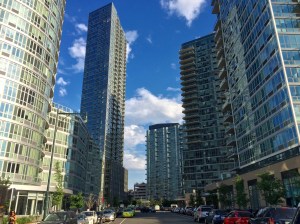
First it was billionaires. Now the so-called Creative Class and its Millennial progeny are deemed responsible for The New Urban Crisis, which is what Creative Class guru Richard Florida has dubbed enormous inequality in cities, the concentration of extreme poverty, and the tsunami of gentrification that displaces lower-income people. (His book by that name, which I have read about—but want to read—arrives in April.)
Is there a New Urban Crisis? No. Though income inequality permeates the economy, the cities where extraordinary wealth collides with deep poverty are few. Many other cities, some struggling to survive, wish a wave of rich people would move in.
There’s no doubt that some cities have become extraordinarily expensive, displacing not just the poorest, but middle-income earners as real-estate developers “discover” the charms of incipiently charming and cheap enclaves, and drive long-time residents out with skyrocketing rents, home prices, and boutique supermarkets.
Hyper-wealthy cities are rare
A chasm exists between enclaves of poverty and hyper-wealth in New York, San Francisco, Boston, Washington, Miami, San Francisco, Los Angeles, Seattle and Vancouver, Canada—and almost nowhere else.
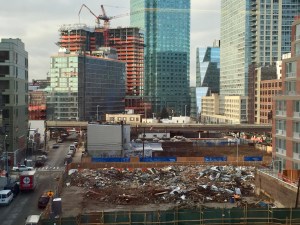
In New York City’s Long Island City, where I work, 45-story towers with starting rents demanding six-figure incomes rise next to car-repair shops likely to employ workers in the low five figures. You will not see that contrast in Baltimore, St. Louis, or El Paso. That’s because these and many other places live in the larger US economy of stagnating jobs and incomes. Or they are worse off: the industrial-era castoffs that continue to lose businesses and population, and see no clear path to revival.
Evil regs? A smokescreen
So we can’t be simplistic about what’s wrong with cities these days. But that’s just what’s happening. A recent New York Times story repeats the canard that housing costs will decline if only we get rid of those darned regulations. Edward Glaeser, the economist author of The Triumph of the City, sings the same song, as does Joel Kotkin, who I deem the chief cheerleader for the Triumph of the Suburbs. In fact, regulations have been blamed for urban woes (loss of middle class, lack of investment) since the Reagan era.
It was a lazy formulation then and lazier now. Some regulations do make cities more costly. These are mostly local and I’ll get back to them. But key reasons for housing inflation have to do with growing concentration of wealth and national policy that hasn’t caught up. These reasons continue to be ignored. No messing with local regulations will fix the problem.
Follow the tax benefits
Federal tax policy is enemy number one. It pushes up home prices in areas where wealthier people settle because tax advantages are too focused on real estate and too generous to the affluent.

Deductions for mortgage interest, property taxes, and forgiveness of capital-gains taxes cost the treasury dearly, well north of $100 billion every year ($80 billion, $35 billion, $29 billion respectively in 2016, according to the Congressional Joint Committee on Taxation). Those with more than $100,000 in income receive over 85 percent of the mortgage interest deduction tax benefits, according to the Tax Policy Center. When such lush tax benefits are in the offing, you’ll do whatever it takes to increase your home’s value.
Preserving quality of life? Or racial purity?
Hence those regulations. The well-off may talk about “preserving quality of life” as they zone for large lots, prohibit apartments, and slow development. The more important intent is to preserve property-investment gains, and (brazenly at times) to ensure racial purity and keep out middle and lower-income people because they are perceived to cost more in government services.
There’s no penalty for pursuing any of these discriminatory goals. It’s an industry in New Jersey. In New York’s high-wealth neighborhoods, phalanxes of top lawyers and Hollywood movie stars are deployed to stop unwanted development. These are not resources available in Brownsville, Brooklyn, or most of the rest of America.
Speculators take all
Policy also rewards speculators and investors. Preferential treatment of capital gains, among many other tax gifts, makes real-estate speculation extremely attractive, which is why private equity snatched up millions of homes foreclosed in the crash, and rented them back to the foreclosed upon. President Trump apparently used a breathtaking $1 billion in real-estate losses to offset taxes on ordinary income, possibly paying no tax at all for close to 20 years. (We don’t know this for sure because Trump has not released his tax returns). He took advantage of a tax advantage allowed only to real estate developers. By so generously cushioning huge losses, the tax code encourages the taking of extraordinary—even stupid—risks. Bubble, anyone?
Housing Bubblenomics
Well, yes. The three deep recessions since the Reagan era were caused or exacerbated by home-price bubbles. Reagan’s tax policies were so generous to real-estate developers that they built subdivisions, strip malls, and skyscrapers without bothering to seek buyers or renters. They thought they could afford to wait for them. Abetted by lending crooks, that bubble burst in the mid 1980s. At the end of the 1990s, dot-com companies like the now floundering AOL, created paper hyperwealth which was rapidly applied to create paper real-estate gains. That bubble burst just before 9/11, and in the ensuing fear of economic collapse, the generous tax breaks and regulatory laxness were extended, leading to a bubble of liar loans and junk debt dishonestly sold as risk-free. That mess ushered-in the Great Recession that began in 2008.
Congressional Republicans’ grand plan for tax reform could be an opportunity to help ordinary wage earners rent or buy shelter. After all, homeownership continues to drop while rents keep rising. Reform should rein-in tax advantages that enrich only investors and speculators. Housing tax policy, however, isn’t even on the radar as far as I can see. (Though it could be. Are any Democrats paying attention?)
You can’t get there
There’s another important reason cities are too expensive. Mobility. People are attracted to dense, walkable transit-rich cities because they are sick of spending their lives stuck on jammed freeways and want to live in real neighborhoods where they can get to work or someplace nice on foot. Unfortunately policies at federal and state levels continue to favor highways almost exclusively.
Demand for transit far outstrips the meager local ability to pay for it, which means relatively few cities can create the culturally rich density that’s in high demand. American cities with ample transit are very expensive in part because they are rare.
Cities with amenities and lots of smart, interesting people have attracted the best talent—The Creative Class codified by Richard Florida. Their entrepreneurial talent has created enormously successful companies—Apple, Microsoft, Google, Amazon—in just a few cities—and a startup ecosystem that’s nurtured enormous urban vitality. These companies pay well, and the pricey cities tend to have large cohorts of people earning six figures, which drive prices up for everyone else. Most cities would love to have this problem, though smart idealistic people who shun the costly cities are largely responsible for the renewal of such historically poor but inexpensive cities (with great potential if not all the amenities) as New Orleans and Detroit. Most cities have got cheap housing because no one’s earning enough or getting raises.
Global wealth has also distorted the housing economies of America’s desirable global hubs. I don’t see that going away. People in Hong Kong, Mumbai, Beirut, and Sao Paolo want to live in—or at least invest in—Vancouver, Boston, San Francisco, and Miami. A great many people have realized you don’t need billions to have a New York City pied á terre, just a few spare millions.

These realities point to fixes more likely to be effective at dampening housing inflation than just peeling back local zoning rules. Reducing incentives to treat housing as purely an investment would reduce price pressure, and remove wealthy communities’ incentive to regulate purely to increase value. This is achievable. After all, for the three decades after World War II, the owned home offered a modest wealth-building effect while maintaining stable prices. It’s among reasons the middle-income “Greatest Generation” largely retired in comfort.
The next bubble
If local, state, and federal policy supported diverse transportation options—transit, networks of bike lanes, and safe accommodation for pedestrians, many more cities and suburbs could create culturally rich, dense neighborhoods and prices for such places would fall.
If we don’t focus on all the reasons for housing volatility, we’ll never escape the boom-bust cycles of the last three decades. Unfortunately the tax “reform” effort said to begin soon, will likely entail inducing yet another housing bubble by offering more tax advantages to people who don’t need them to create the appearance of economic growth. Hold onto your wallet.


 James S. Russell
Leave a reply to Roberta Brandes GRATZ = name for invitation Cancel reply