
New York subway delays became epidemic this summer and emergency repairs at Penn Station snarled commuter traffic. A recent column by the NYT’s Michael Kimmelman ruminated on these transit woes and . . . Brexit.
The column looked at London’s Crossrail—a $20-billion expansion of the city’s crowded transit system that is a heroic feat of engineering and said to be the largest infrastructure project in Europe. It’s an important story for Americans, who simply cannot competently build complex major infrastructure projects.
Kimmelman ruminated on whether the project might be overambitious given the possible decline of London in a post-Brexit era. Since no one knows what Brexit will bring, such speculation muddles the real story: Crossrail appears to be on schedule to introduce service six years from the start of construction, and largely on-budget.
NYC: Breathtaking cost overruns
By contrast, far more modest projects of the New York MTA and Port Authority have taken years longer than they should have, with breathtaking cost overruns: the endless retrofitting of modern train signals, the Second Ave. Subway, the transit hubs at the World Trade Center site, the tunnel linking the Long Island Railroad to Grand Central. Each cost much more per rail mile than Crossrail.
It’s simply untenable to grow our transportation system this way. Yet only now that subway problems have reached critical mass have citizens and elected officials awakened to the fact that our essential infrastructure agencies are critically mismanaged and lack capacity to execute projects.

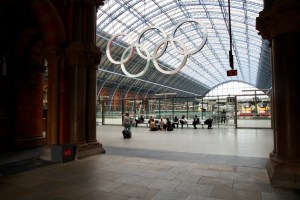
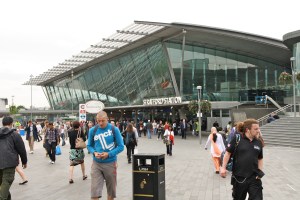
When New Yorkers complained about subway snafus and our awful airports, we could once take comfort that London was worse. Heathrow airport’s ancient terminals were falling apart, and its Terminal Five took 25 years to build and cost billions more than advertised. Heathrow has since built its Terminal 2 quickly and for far less money, and now has the confidence to contemplate a badly needed additional runway. London showed how powerful expanded mobility could be, when it built the Jubilee Line in the 1990s, linking isolated neighborhoods to the east and south of the Thames to the center with beautifully designed stations that were a beacon amid blight. London rebuilt St. Pancras Station for high-speed rail to Europe and a 10-minute ride to Stratford, site of the Olympics that has transformed London’s East. The Western Concourse of the adjacent Kings Cross station is an elegantly inventive way to build over an Underground concourse without touching it.
We need to know how such a turnaround was engineered and learn from it. Gov. Cuomo is secretively overhauling LaGuardia Airport using a private consortium, utterly sidelining the Port Authority of New York and New Jersey which is fast losing its reason for existing. The airport is now a construction mess but there’s been almost no reporting on the adequacy of the design, whether it is on time, or what it will cost.
Brexit Schmexit
Kimmelman fears Crossrail won’t attract ridership because Brexit may bring on a decline in London. Brexit Schmexit. It is typical of American short-term thinking that the temporary effects of leaving the European Unioin—whatever they are—should be an excuse to reconsider an enterprise that looks ahead 100 years and solves an extraordinary number of known problems.
Crossrail is important to London’s future because it draws together so many areas of east and west London, halving travel times for many. In New York it’s the equivalent of a seamless ride from Ronkonkoma to Princeton or a through train from Westchester to the airports and Long Island. None of this is even on the radar here. Crossrail will mean many quasi-isolated neighborhoods and suburbs will be able to quickly access jobs and other resources. Access is how cities create opportunity and economic growth—it’s fundamental to urban success.
Choosing neighborhood improvement or paying the rent
Yet Kimmelman further muddies the key questions by making a pernicious argument: access brings investment, yes, but also gentrification, which has the power to displace people. That uncritically replays a toxic argument in New York where any improvement is vilified as a harbinger of greedy developers hell-bent on displacing long-term residents.
Gentrification can (and should be) a good thing, bringing investment and opportunity to neglected and under-resourced neighborhoods. The torrid dynamic of neighborhood transformation in New York today is unprecedented, at least in living memory, and deservedly gives gentrification a bad name. Now activists in poor communities fear better parks, housing, libraries, and cultural facilities because they are perceived to draw displacement-inducing development. No one can blame the activists, but it is tragic that neighborhoods must choose between local investments that create opportunity and paying the rent. Should no meaningful investments be made? That’s where Kimmelman is taking us.
The unprecedented concentration of wealth in New York is primarily responsible for today’s hypergentrification and it is by no means guaranteed to continue. However, one way to lesson the effects of huge wealth gaps is to provide more transit supply to more parts of the city and metro area, making more neighborhoods convenient to transit, which helps reduce upward pressure on housing prices. Crossrail is big enough to have that effect.
Muddling ahead with no roadmap
Since there is no strategic approach—no strategic capacity even—at MTA and the Port Authority, there is no similar vision to broadly improve mobility in the New York metro. Sclerotic roads, dysfunctional airports, and imploding transit service are not only infuriating, they are probably the largest impediments to long-term growth and opportunity in New York. And the lack of transport supply means neighborhoods well-served by transit serve only the well-heeled.
New York is feeling the effects of its chronic short-sightedness in transportation. We’ve got to keep our eyes on the prize: fixing this mess. It’s time to learn from London and other cities made great by smart investments in infrastructure.


 James S. Russell
Leave a reply to James Russell Cancel reply